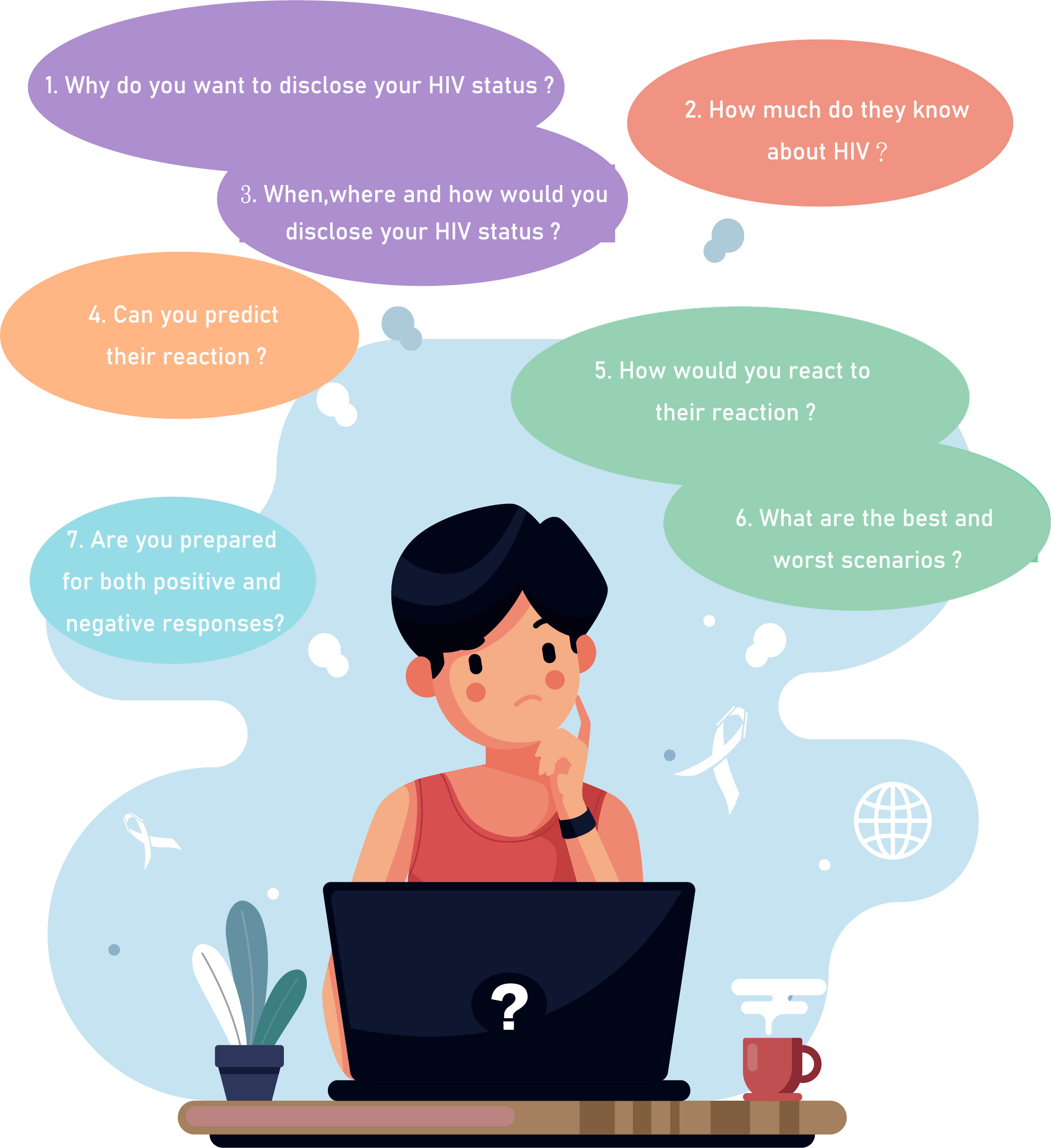
If you choose to disclose, the following information can be helpful:
Start treatment and manage your health first.
Consider informing your partner/friends/family/sexual partner when your condition is under control and your viral load is undetectable. This will provide them with reassurance and reduce their concerns. The acceptance and understanding from the other person are likely to be higher.
Deciding to disclose:
Start with trusted friends or close family members with whom you can share your feelings or difficulties and seek their support.
Informing your sexual partner/partner:
After knowing one’s HIV status, individuals may seek comfort and support from their partners.
If you are in a stable relationship, informing your partner is likely one of the first things to consider.
Especially if there has been unprotected sexual activity during the relationship, concerns about the potential transmission or the impact on the relationship may arise.
Feeling nervous, awkward, or even scared about your partner's reaction during this process is normal.
You can choose to discuss feasible options with healthcare professionals. If informing your partner personally feels too challenging, consider seeking support from a third party, such as a medical clinic or relevant organizations. It’s also advisable to go for testing together.
Providing time for family members/ partner to digest the information
No need to interpret the reaction family members/ partner as signs of rejection.
As they will need a moment to digest after receiving such information.
Through considering these questions, we hope that you can decide whether or not to disclose your status and have sufficiently prepared for it.
If you have any concerns or would like to talk to someone, please contact us.